



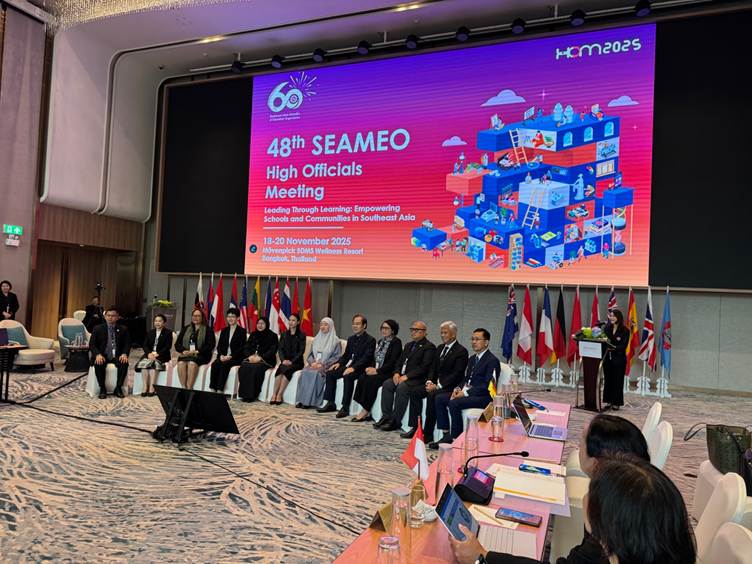
From 18 to 20 November 2025, the Southeast Asian Ministers of Education Organisation (SEAMEO) held its annual High Officials Meeting (HOM) in Bangkok. The event brought together 148 participants from 11 Member Countries, three Associate Member Countries and 12 international organisations and universities.
Held under the theme “Leading Through Learning: Empowering Schools and Communities in Southeast Asia,” the meeting highlighted the growing importance of educational leadership and community engagement in strengthening the region’s education systems.
The main session on 19 November was formally opened with the welcome remarks by Datuk Dr Habibah Abdul Rahim, Director of SEAMEO Secretariat (SEAMES), followed by statements from the Permanent Secretary of Thailand’s Ministry of Education and the Minister of Education of Brunei Darussalam.
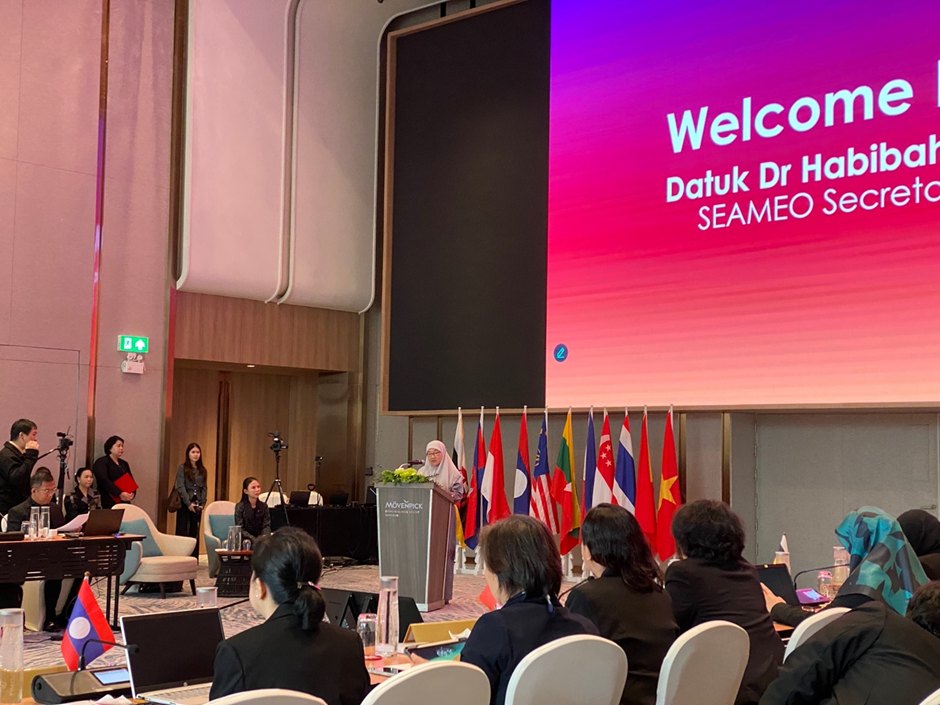
As SEAMEO marks its 60th anniversary, Datuk Dr Habibah reflected on six decades of regional development in education, emphasizing that high-quality education hinges on school leaders “defined by action rather than title.” She stressed the need to empower principals, encourage teacher innovation, and involve communities as active partners. She also praised the SEAMEO Priority Learning Metrics (PLM) initiative for providing data to measure leadership impact and highlighted the 26 SEAMEO regional centres as key drivers of excellence in their respective fields.
Thailand’s Permanent Secretary reiterated the transformative power of education when nations work together. Reflecting on the year’s theme, she expressed hope that schools will remain places of hope where teachers act as builders of the future and communities ensure every child has access to opportunity. On behalf of the Royal Thai Government, she reaffirmed full support for SEAMEO.
Brunei’s Minister of Education, and concurrently SEAMEO Council President, via video presentation, added that the theme underscores the need to move beyond traditional classroom boundaries and to develop holistic learning ecosystems where schools and surrounding communities strengthen one another.
Regional spotlights
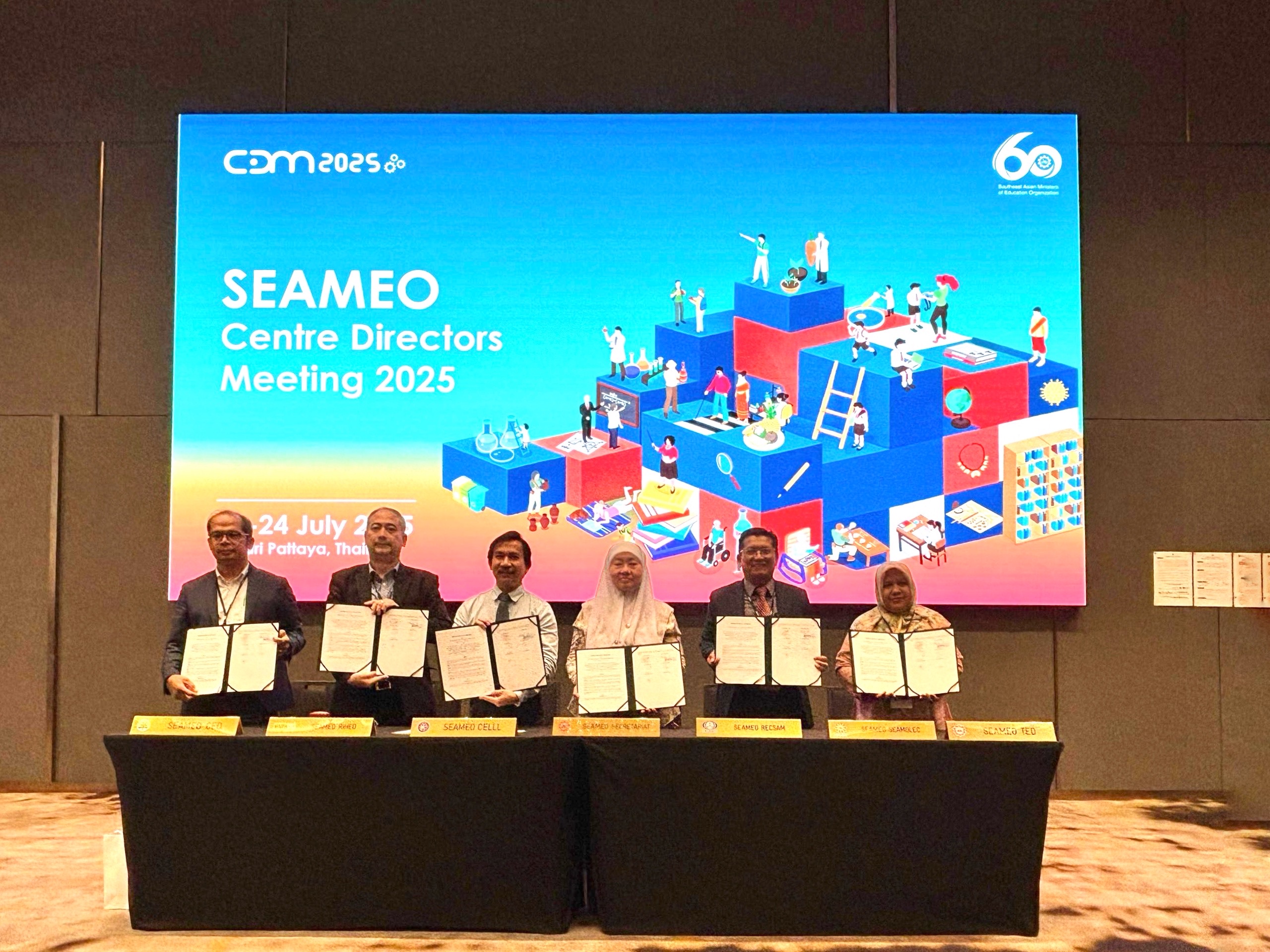
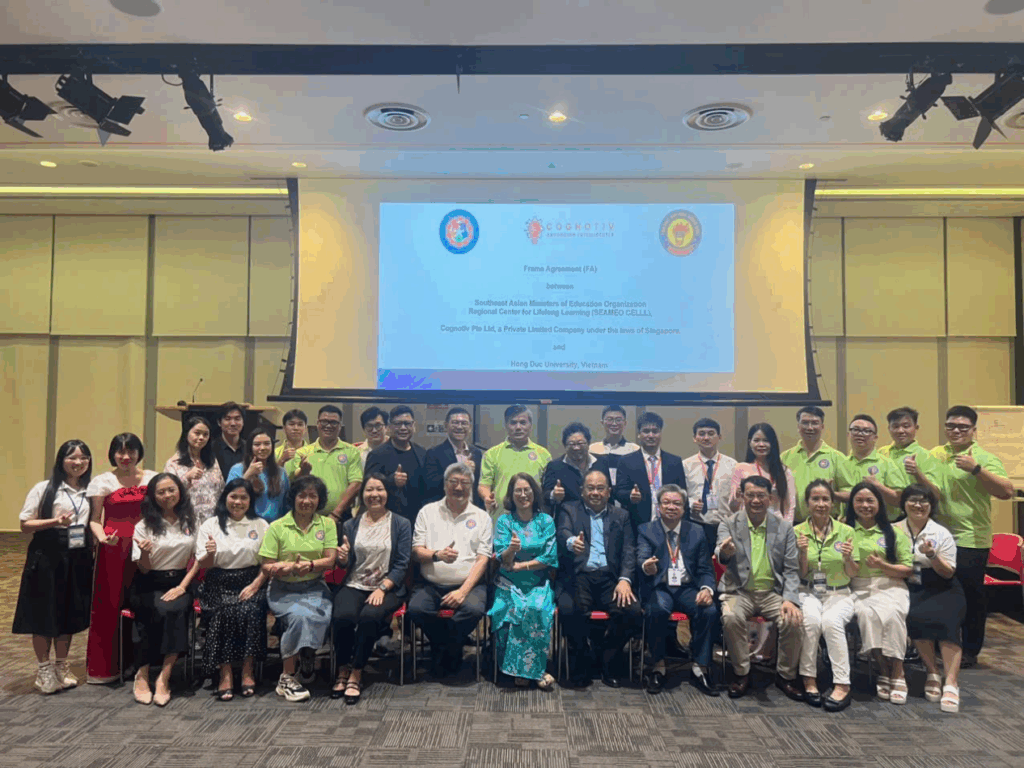
The delegates approved the 50 working papers (as ad referenda) and heard updates on national efforts to strengthen school leadership and teacher development. SEAMEO CELLL had a working paper on its three-component framework programme that promotes AI integration in education and competency assessment for lifelong learning.
Representing Vietnam, Dr Nguyen Thanh Hai, Deputy Director-General of the International Cooperation Department of the Ministry of Education and Training, highlighted several major policy directions, including Resolution No. 71-NQ/TW of the Politburo on breakthrough solutions for education development and the new Law on Teachers, which recognises leadership capacity as a strategic driver of educational transformation. He also referred to Resolution No. 281/NQ-CP, which focuses on developing qualified teachers and improving facilities in preschool and general education, and Decision No. 1164/QĐ-BGDĐT, which outlines a long-term programme to upgrade the qualifications of teachers and managers from 2026 to 2045. He noted that teacher salaries have been placed under a special salary scale to improve incentives.
Other Member Countries also demonstrated strong commitments through a variety of national policies and programmes. These included Brunei Darussalam’s professional development systems for teachers, Cambodia’s Education Strategic Plan and Teacher Policy Action Plan, Indonesia’s Rumah Pendidikan initiative supporting its four million teachers, Lao PDR’s Continuing Professional Development Framework, Malaysia’s KOMPAS 2.0, a School Leadership Competency Standard, Myanmar’s Teacher Competency Standards Framework, the Philippines’ NEAP Leadership and Professional Standards Initiatives, Singapore’s Leaders in Education Programme, Thailand’s nationwide efforts aligned with the SEAMEO Strategic Plan 2021–2030 and Timor-Leste’s National Framework for School Leadership 2023-2030 and the School Leaders Training Programme.
SEAMEO associate and affiliate members also gave updates on their ongoing work in Southeast Asia. Australia highlighted its collaborations across the region, particularly its partnership with Vietnam through the VietnamAustralia Human Resources Development Programme (Aus4Skills). Spain reflected on its shared challenges with Southeast Asia in addressing diversity and equity, noting that its cooperation places strong emphasis on bilingual education and teacher training.
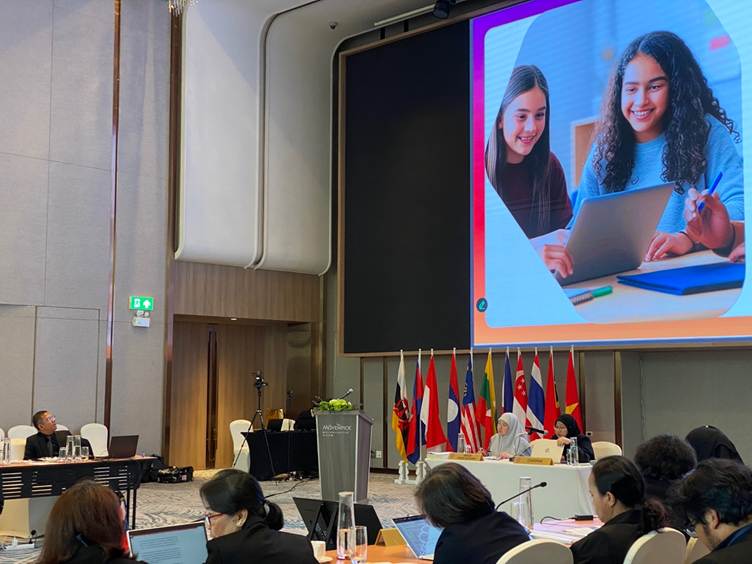
The University of Tsukuba, a long-standing SEAMEO partner since 2009, reported continued progress with its Teacher E-Training Series and Japan Virtual Campus. SEAOHWA, an online One Health education platform, announced that it now offers 22 courses, including 4 available in Vietnamese and 4 in English.
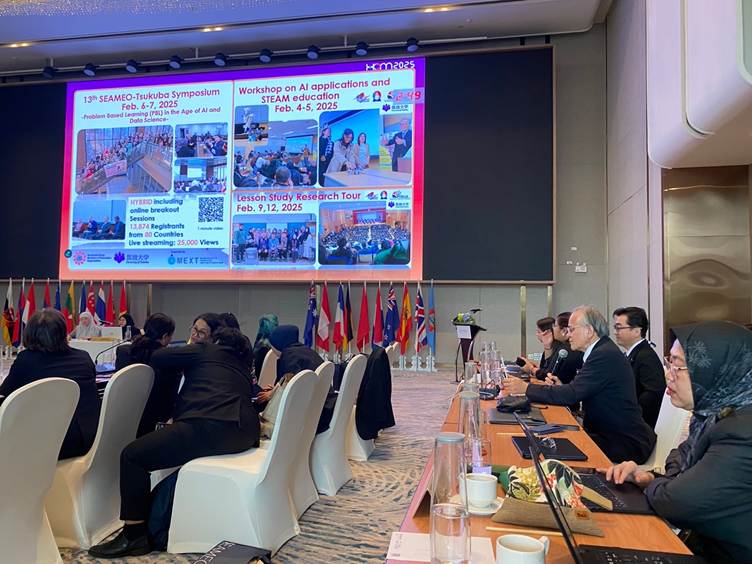
SEAMEO partners also presented their recent initiatives. Japan’s Ministry of Education, Culture, Sports, Science and Technology (MEXT) outlined the latest developments in its Dispatched Expert Programme and the SEAMEO–Japan ESD Award. Since 2011, MEXT has sent 79 experts to 16 SEAMEO centres, providing support in areas ranging from 21st-century learning practices to STEAM education for early childhood. The 2025 theme of the ESD Award focused on building resilience in schools and communities through the revitalisation of local wisdom in disaster risk reduction, with the top prize including a study visit to Japan. Participation from Vietnam remained limited though, with only seven entries compared to much higher submissions from the Philippines and Indonesia.
UNESCO Bangkok, represented by Dr Rika Yorozu, reported on various collaborative projects with SEAMEO centres. She highlighted UNESCO’s close cooperation with SEAMEO QITEP centres and STEM-ED on advancing the Southeast Asian Roadmap on Multilingual Education and contributing to the regional workshop Educational Planning and Governance in the Intelligent Era: A Southeast Asian Perspective. In the coming year, UNESCO will support national focal points through orientation and peer-learning activities, with a particular focus on expanding the regional network of learning cities—from the current 19 to a targeted 30 by 2030. UNESCO Bangkok is preparing to host the ASEAN+ Learning Cities Conference in Ho Chi Minh City in November 2026.
In addition to the main plenary session, two special sessions on 18 November explored the proposed Southeast Asia School Leadership Hub by Global School Leaders, and a region-wide artificial intelligence strategy led by EdTech Hub.
Global School Leaders, an organisation already active in 23 countries, expressed its vision of expanding into Southeast Asia so that “every child learns in a school guided by capable and respected leaders.” The organisation emphasised that school leaders form the essential bridge between policy and practice, and that investing in leadership capacity and regional collaboration is critical for elevating education quality.
EdTech Hub presented its AI Theory of Change, a structured framework outlining how artificial intelligence can contribute to progress in education, science and culture. Designed both as a strategic vision and a practical roadmap, the framework seeks to guide SEAMEO centres, ministries and partners in collaborating more effectively, sharing resources and identifying concrete actions that ensure AI serves the needs of all learners in the region.
On 20 November, SEAMEO launched the Empowering Teachers Initiative Regional Report on teacher professional development, reaffirming the region’s shared commitment to strengthening teacher quality through systematic upskilling.
As Southeast Asia is upgrading its education systems, the 2025 High Officials Meeting signalled a clear regional commitment: strong school leadership, empowered teachers, and strategic use of technology are essential to delivering resilient, high-quality education for the next generation.